CONCLUSION:
A NON-DECOLONIZED NARRATIVE
Our findings using Critical Discourse Analysis and Multimodal Analysis
FINAL CONCLUSION
The British Museum does not offer a decolonized narrative of migration, but rather reproduces colonial forms of knowledge through language, display, and omission.
KEY FINDINGS
1. Colonial Discourse is Still Present
The exhibition is catered toward white European colleagues. Already upon entrance, these ideas are established as an inherent feature within the British Museum.
Through the central positioning of Western knowledge, particularly in the Pharmacopea, visitors are guided to understand European practices as the standard. Other cultures are presented in relation to this central framework, reinforcing a hierarchy in which Western perspectives appear more legitimate.

2. Language and Power
Drawing on Norman Fairclough, museums are not neutral sites of knowledge but institutions that construct meaning through language, categorization, and display.
These displays do not contradict the dominant narrative but rather reinforce them to the groups of visitors entering the museum daily.

3. Colonial History and Silence
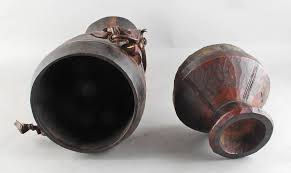
The curators of the British Museum ignore Britain’s colonial history by not offering a decolonized narrative of migration.
As the museum refrains from explaining why objects appear before us or how they were taken from their home countries, we are presented with a washed version of history.
4. Strategic Ambiguity
With the museum remaining ambiguous about their stance, this reflects what Fairclough describes as “synthetic personalization” — language that appears universal but masks institutional authority.
This wording depoliticizes colonial histories and erases unequal power relations.
5. The Moai
The Moai shows that even when the museum acknowledges colonial histories and recognizes the cultural and spiritual importance of the object for the Rapa Nui people, it is not willing to give up control.
This reveals the limits of its decolonizing narrative.
